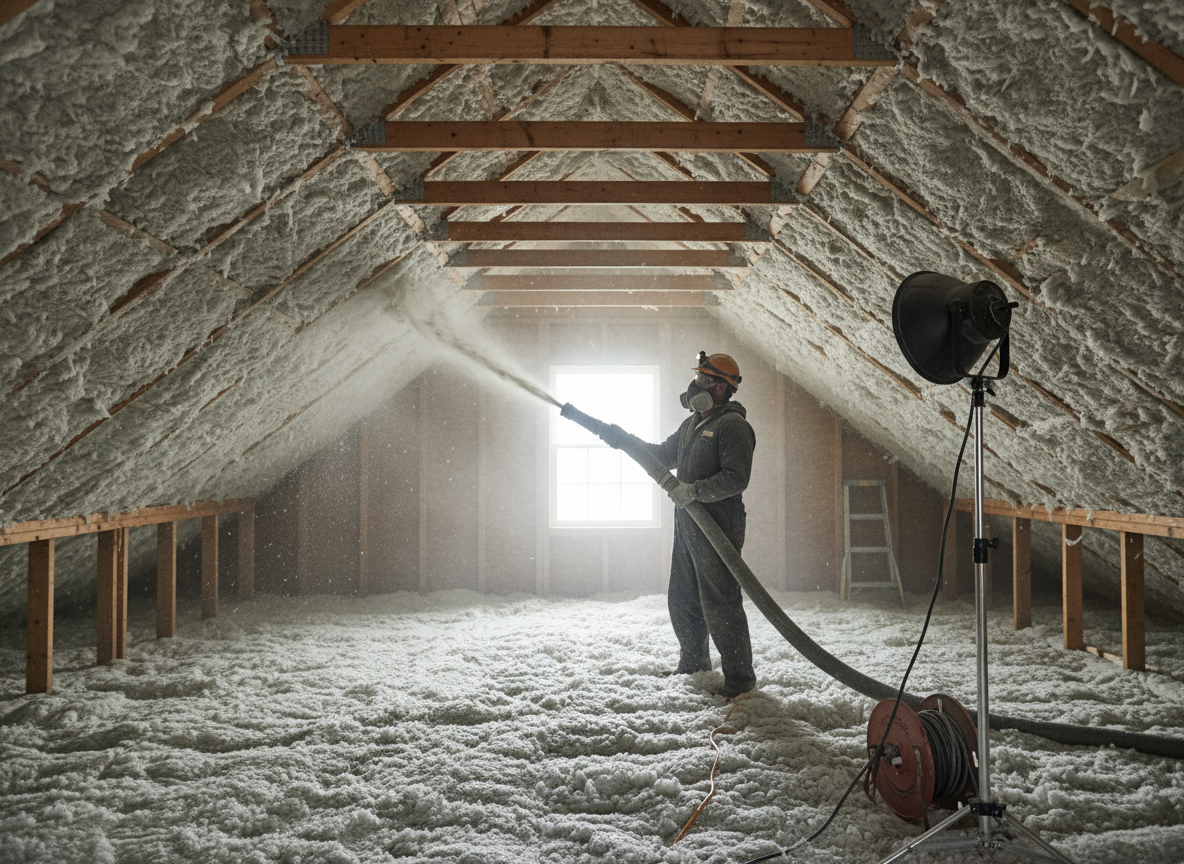
Milwaukie homes built before the 1980s in neighborhoods like Ardenwald and Hector Campbell often have minimal or settled attic insulation that fails during the region’s long wet winters. Blown-in cellulose or dense-pack fiberglass works best here because it conforms around existing wiring and rafters while allowing some breathability, unlike rigid boards that can trap moisture against roof decks near the Willamette River.
Clackamas County energy codes require minimum R-49 in attics for most single-family homes. We check for knob-and-tube wiring common in Downtown Milwaukie and Island Station properties before any material is installed, and we add baffles and ridge venting to maintain airflow that prevents condensation during the shift from warm dry summers to heavy winter rains.
Homeowners frequently overlook recessed lights and bathroom exhaust fans that vent into the attic. These create heat bypasses that reduce insulation performance and raise the risk of ice damming along eaves when temperatures hover near freezing after a storm.
Proper attic insulation also reduces summer heat gain from the dry season, keeping second-floor rooms cooler without extra load on cooling systems common in Portland-commute households.
Technician insight
In Milwaukie, the thing that catches most people out with attic insulation is the combination of older plaster ceilings and river-influenced humidity in Island Station homes; if you don’t fix the exhaust fan venting first, new insulation just holds moisture against the drywall.
Ardenwald Attic Moisture Fix
Homeowner in Ardenwald reported uneven heating and musty smells after heavy winter rains. We found settled fiberglass and a blocked soffit on a 1960s ranch near the river. After sealing the fan and adding baffles we installed cellulose to R-49. The attic now stays dry and the upstairs stays warmer through the wet season.
How it works
- 1
Initial Attic Assessment
We inspect insulation depth, ventilation, wiring, and moisture signs from a ladder at your Milwaukie address.
- 2
Moisture and Air Sealing Prep
Seal bypasses around pipes, lights, and fans, then confirm baffles and intake vents are clear before material goes in.
- 3
Insulation Installation
Blow or dense-pack cellulose or fiberglass to R-49 or higher while maintaining required ventilation paths.
- 4
Final Ventilation Check
Verify ridge and soffit airflow and document the finished R-value for your records.
Pricing
Upfront quotes provided after on-site inspection; final price depends on attic access, existing insulation condition, and ventilation corrections needed.