Milwaukie homes built before the 1980s in neighborhoods like Ardenwald and Island Station often have minimal or settled insulation that fails during the mild wet winters common to the Willamette River corridor. Installers must address moisture drive from the river side while sealing attics and walls against summer heat gain. Proper vapor retarder placement and ventilation adjustments prevent condensation that shows up first in Clackamas County crawl spaces near the water table.
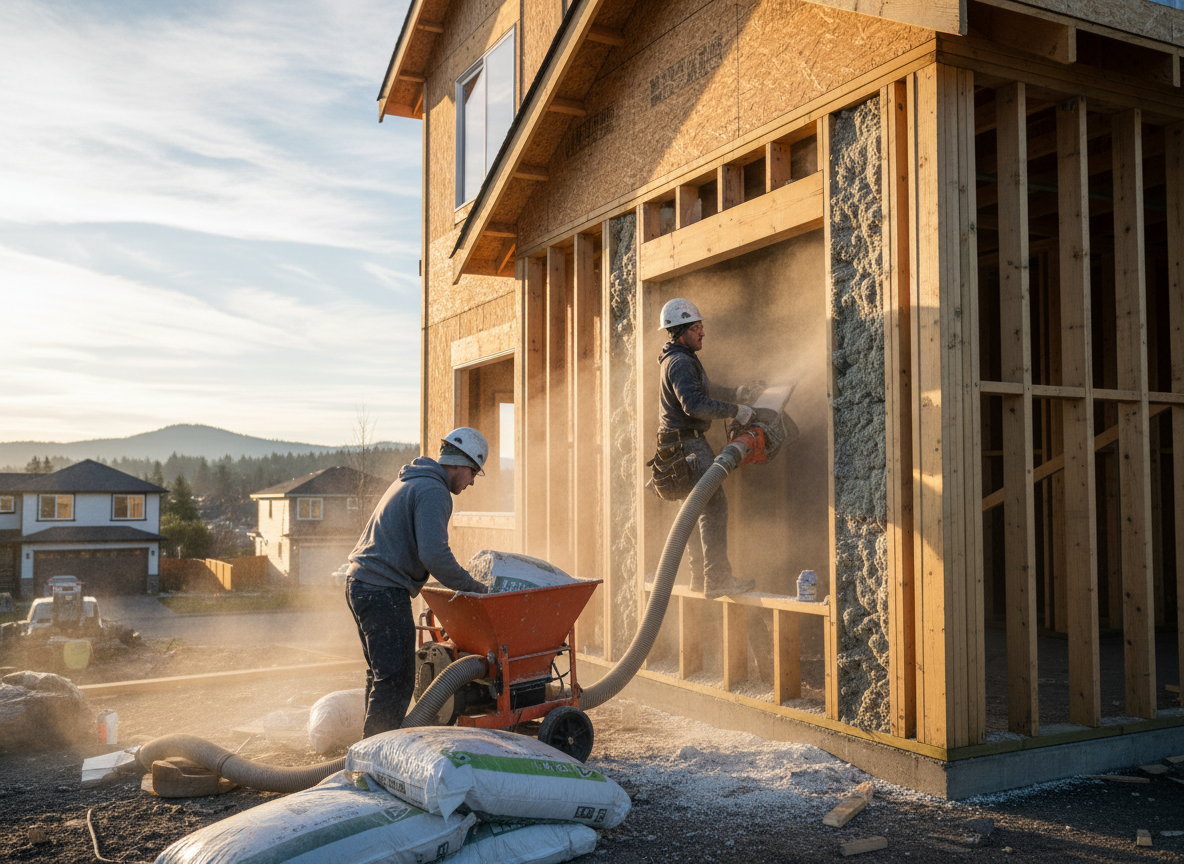
Working near Portland means many calls come from homes in Hector Campbell and Downtown Milwaukie where narrow lots and mature trees limit access for large equipment. Installers frequently use dense-pack cellulose or mineral wool in balloon-framed walls rather than open-blown methods that can drift onto neighboring properties. Code updates in Clackamas County now require higher R-values in attics, so crews check existing depth before adding material to avoid trapping existing moisture.
Terrain along the riverfront creates microclimates where fog lingers longer in low-lying blocks, raising the risk of mold if wall cavities are not fully dried before insulation. Experienced crews carry moisture meters on every job and document readings for homeowners who want to see the before-and-after data.
Technician insight
In Milwaukie, the thing that catches most people out with insulation installers near me is how the Willamette River humidity sits in older balloon-framed homes in Ardenwald and Hector Campbell. Homeowners think adding insulation will fix drafts, but if we do not pull the old material and dry the cavities first, the new layer traps moisture that shows up the next wet winter.
Attic Upgrade in Island Station
A 1960s home near Milwaukie Riverfront Park showed uneven fiberglass that had settled and allowed heat loss. We found moisture staining along the north eaves from river fog. Crew removed the old material, added baffles, and installed new cellulose to current Clackamas County depth requirements. The owner later reported steadier indoor temperatures through both winter rains and summer dry spells.
How it works
- 1
Initial Site Walk
Technician inspects attic, walls, and crawl space while noting existing insulation depth, air sealing gaps, and any signs of past moisture in Milwaukie homes.
- 2
Material and Access Plan
Crew selects insulation type suited to local wet winters and determines entry points that avoid damaging older siding common in Clackamas County neighborhoods.
- 3
Installation Day
Materials are blown or packed into cavities with attention to even coverage around knob-and-tube wiring and ductwork found in Island Station and Ardenwald houses.
- 4
Final Check and Documentation
Moisture levels are rechecked, ventilation paths confirmed, and photos provided showing completed work for the homeowner's records.
Pricing
Upfront quotes after on-site inspection; final cost depends on access difficulty, material choice, and square footage in older Clackamas County homes.