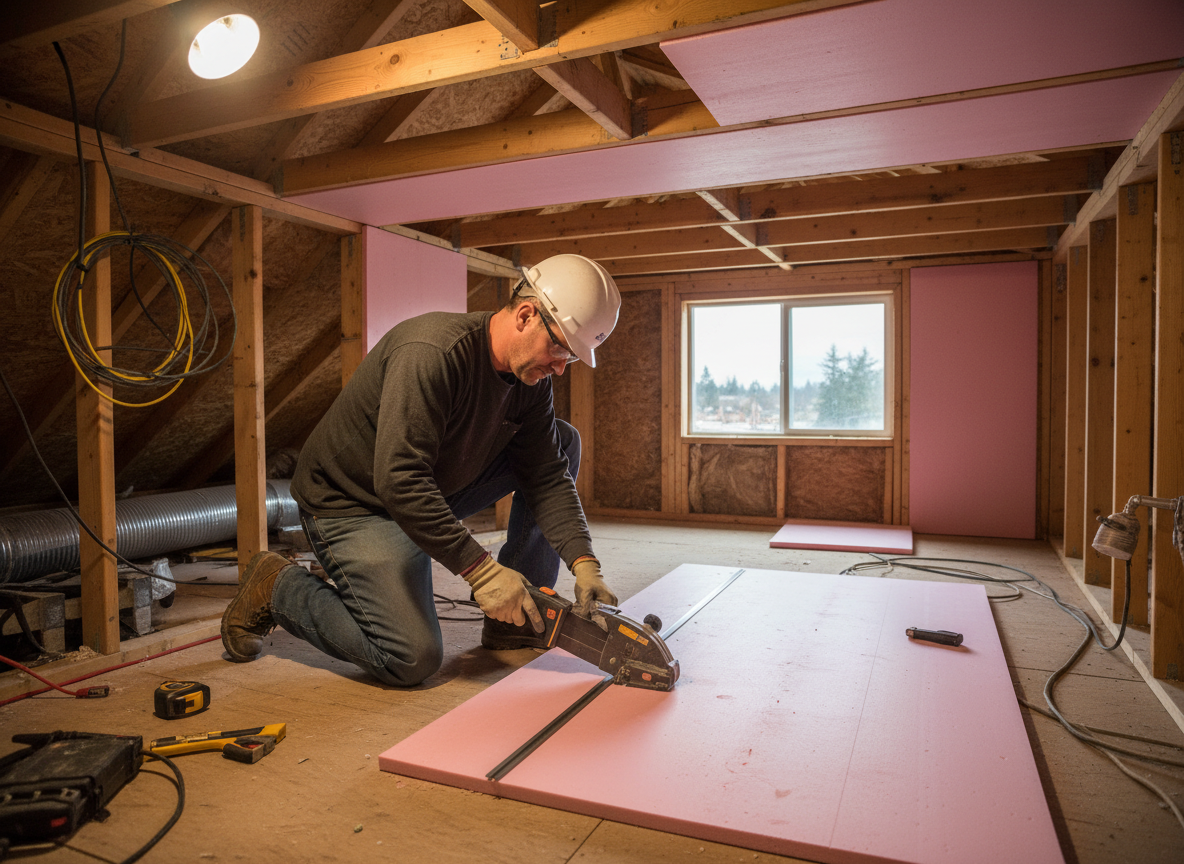
Foam board insulation works well in Milwaukie because the material resists moisture that builds up during the mild wet winters common along the Willamette River. In older homes throughout Downtown Milwaukie and Hector Campbell, crews often apply extruded polystyrene or polyisocyanurate boards directly to foundation walls and rim joists after checking for existing water intrusion. Proper seam taping and gap filling prevent condensation that can occur when warm indoor air meets cooler surfaces during the rainy season.
Clackamas County homes built before the 1970s frequently have uneven basement walls and limited access points that require cutting boards to fit around pipes and electrical runs. Installers measure twice and use compatible adhesives rated for below-grade use to avoid delamination when soil moisture rises. In Ardenwald and Island Station properties near the river, extra attention goes to creating a continuous thermal break so the boards do not shift when the ground settles after heavy winter rains.
Code requirements in the Portland metro area call for specific R-values on exterior walls and conditioned basements. Foam board must be covered with a fire-rated material in living spaces, and installers verify that any existing knob-and-tube wiring is addressed before covering. Homeowners in Milwaukie should expect the work to take longer in homes with finished lower levels because crews must work around existing finishes while maintaining a sealed envelope against summer humidity that follows the dry season.
Moisture Control Notes
Foam board performs best when paired with a vapor retarder on the warm side in wet-winter climates like Milwaukie’s. Skipping this step in river-adjacent neighborhoods allows trapped moisture to degrade both the insulation and nearby wood framing over time.
Technician insight
In Milwaukie, the thing that catches most people out with foam board insulation is the combination of older foundation walls and constant soil moisture from the Willamette River during our long wet winters. Homeowners in Island Station and Ardenwald often skip full seam taping, which lets condensation form behind the boards in homes built before the 1980s and turns a simple insulation job into a mold remediation call later.
Ardenwald Basement Walls
Homeowner reported persistent dampness and cold floors in a 1960s house. Inspection showed bare concrete walls with visible efflorescence near the river side of the property. Crews installed polyisocyanurate boards with full seam taping and a vapor retarder. The basement stayed drier through the next winter with no further moisture complaints.
How it works
- 1
Site Assessment
Walk through the home in Milwaukie to check wall condition, moisture levels, and access points in basements or crawl spaces.
- 2
Material Selection
Choose board type and thickness based on the home’s age, location relative to the Willamette River, and required R-value.
- 3
Preparation
Clean surfaces, address minor water issues, and cut boards to fit around utilities and uneven framing common in Clackamas County homes.
- 4
Installation and Sealing
Secure boards with compatible fasteners or adhesive, tape all joints, and add fire-rated covering where required by code.
- 5
Final Inspection
Verify continuous coverage and proper sealing before closing up any finished areas.
Pricing
Project pricing depends on square footage, access difficulty, and whether moisture repairs are required; upfront quotes provided after site visit.