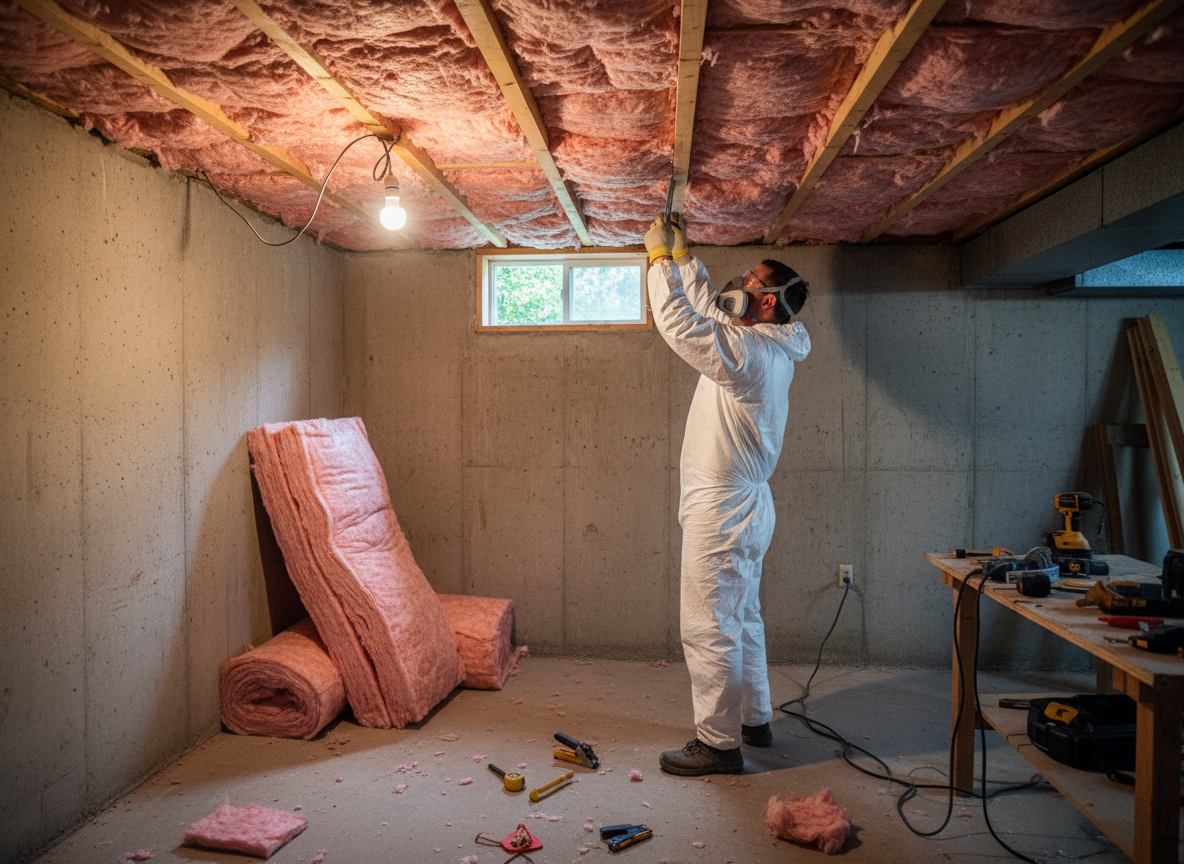
Milwaukie basements in neighborhoods like Ardenwald and Hector Campbell often sit in older housing stock built before modern vapor barriers became standard. Mild wet winters drive groundwater movement toward the Willamette River, creating condensation on foundation walls that can degrade fiberglass batts within a few seasons. We use closed-cell spray foam or rigid foam boards with taped seams to create a continuous thermal and moisture break, keeping the space dry while meeting Clackamas County energy code requirements for conditioned spaces.
Island Station and Downtown Milwaukie properties frequently have partial basements or crawl spaces transitioning into full basements, where rim joists and sill plates are exposed to outdoor air. Warm dry summers allow us to open walls for inspection, but any existing mold from winter seepage must be addressed before insulation goes in. We seal penetrations around plumbing and electrical entries and install a vapor retarder on the interior side to prevent summer humidity from reaching the cool concrete.
Terrain near Milwaukie Riverfront Park slopes toward the river, so some basements experience hydrostatic pressure that pushes water through cracks. Before insulating we check grading and recommend exterior drainage fixes when needed rather than relying on interior insulation alone. This approach prevents trapped moisture that would otherwise reduce R-value and promote rot in floor joists over time.
Technician insight
In Milwaukie, the thing that catches most people out with basement insulation is the high water table along the Willamette River in places like Island Station; homeowners often skip exterior grading fixes and end up with insulation that traps moisture against the foundation during wet winters.
Ardenwald Basement Moisture Job
A homeowner in Ardenwald reported musty smells after a wet winter. We found condensation on the north wall due to poor exterior drainage near the river slope. We corrected grading, installed rigid foam with taped seams, and added a vapor retarder. The basement stayed dry through the following winter with no further odor issues.
How it works
- 1
Site Assessment
We inspect the basement for moisture signs, foundation cracks, and existing insulation condition while noting proximity to the Willamette River and local soil drainage.
- 2
Moisture Control Prep
Any active leaks are addressed and a vapor retarder or drainage plane is installed where needed before insulation materials are applied.
- 3
Insulation Installation
Closed-cell foam or rigid boards are fitted to walls and rim joists, with all seams sealed to maintain continuity in Clackamas County homes.
- 4
Final Inspection
We verify coverage, check for gaps, and confirm the space meets local energy standards before cleanup.
Pricing
Pricing depends on basement size, chosen material, and any moisture prep work required; we provide upfront quotes after the site visit.