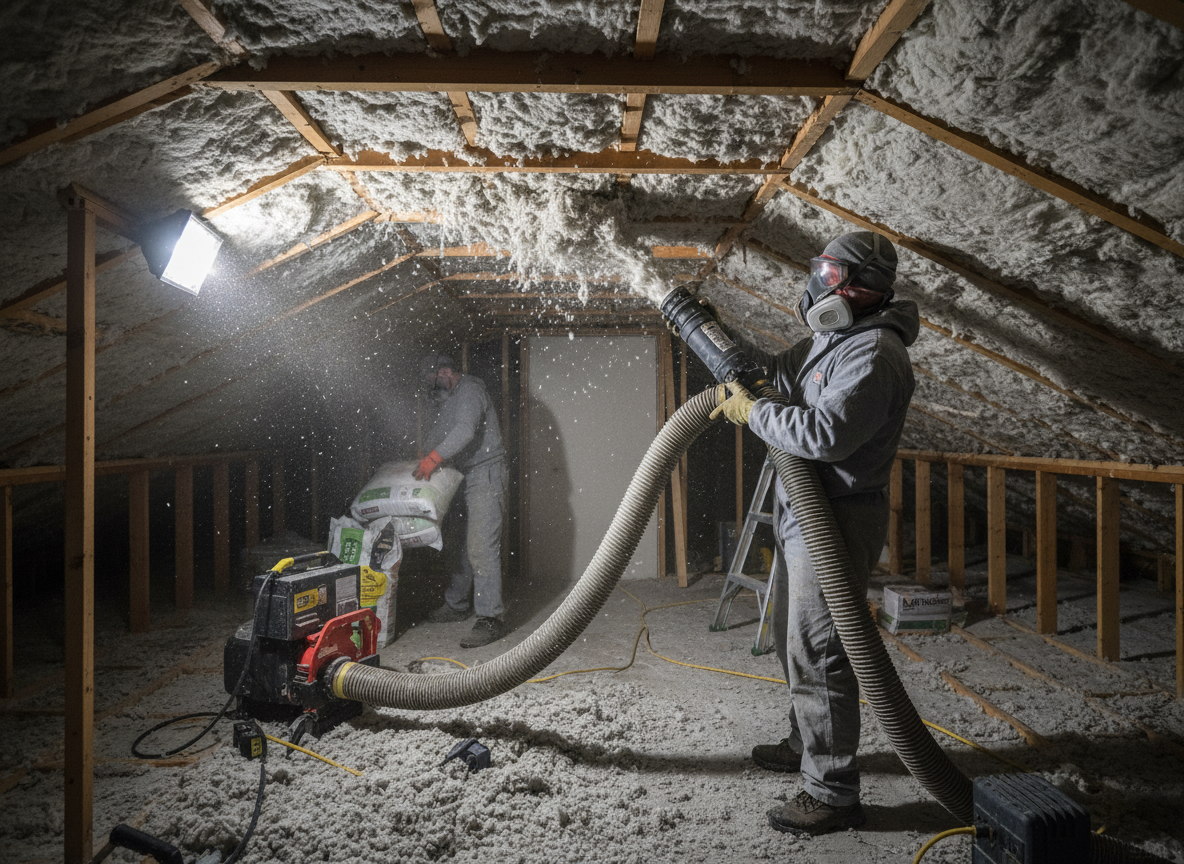
Blown in insulation works well in Milwaukie attics where older homes from the mid-century stock in Ardenwald and Hector Campbell often have uneven joist spacing and existing layers that trap moisture during the region's mild wet winters. Cellulose settles better than fiberglass in these conditions because it fills around wiring and vents without leaving gaps that let warm air escape toward the Willamette River waterfront. Crews must check for adequate ventilation first, since warm dry summers can mask winter condensation issues that lead to mold if the insulation is installed too thick against roof decks.
In Island Station and neighborhoods close to Milwaukie Riverfront Park, many single-story homes sit on flat lots with limited access points, so installers use smaller hoses and staged delivery to avoid damaging plaster ceilings below. Local building codes in Clackamas County require minimum R-values that account for the shift from heavy winter rain to summer dryness, meaning crews verify depth with probes rather than relying on bag counts alone. Homeowners in these areas frequently discover that prior DIY attempts used the wrong material density, which compresses over time and reduces performance once temperatures drop.
Edge cases include knob-and-tube wiring common in pre-1960 homes near Downtown Milwaukie, where blown material must be kept clear to meet safety standards. Portland commuters who own these properties often request same-day service because 24/7 availability lets crews work around shift schedules without delaying winter prep. Proper baffles around soffits prevent insulation from blocking airflow, a detail that matters more here than in drier inland counties because persistent humidity accelerates settling.
Technician insight
In Milwaukie, the thing that catches most people out with blown in insulation is how the mild wet winters push moisture into attics of 1950s homes in Ardenwald, where old vents get blocked by settled material and create hidden rot that only shows up after the first hard rain.
Attic Fill in Island Station
Homeowner noticed drafts during winter rains. We found thin existing fiberglass compressed around knob-and-tube wiring near the Willamette River. We cleared safe zones, added baffles, and blew cellulose to uniform depth. The home now holds heat better through the wet season without condensation issues.
How it works
- 1
Site Assessment
Inspect attic access, existing insulation, wiring, and ventilation in homes across Ardenwald and Island Station.
- 2
Material Selection
Choose cellulose or fiberglass based on moisture exposure from the Willamette River and local winter rain patterns.
- 3
Preparation
Install baffles, seal gaps, and protect fixtures before blowing material to required depth.
- 4
Installation
Blow insulation evenly while monitoring for proper coverage around ducts and vents.
- 5
Final Check
Verify R-value, clear debris, and confirm ventilation remains unobstructed for summer conditions.
Pricing
Upfront quotes based on square footage, access difficulty, and material type; no hidden fees for Clackamas County jobs.