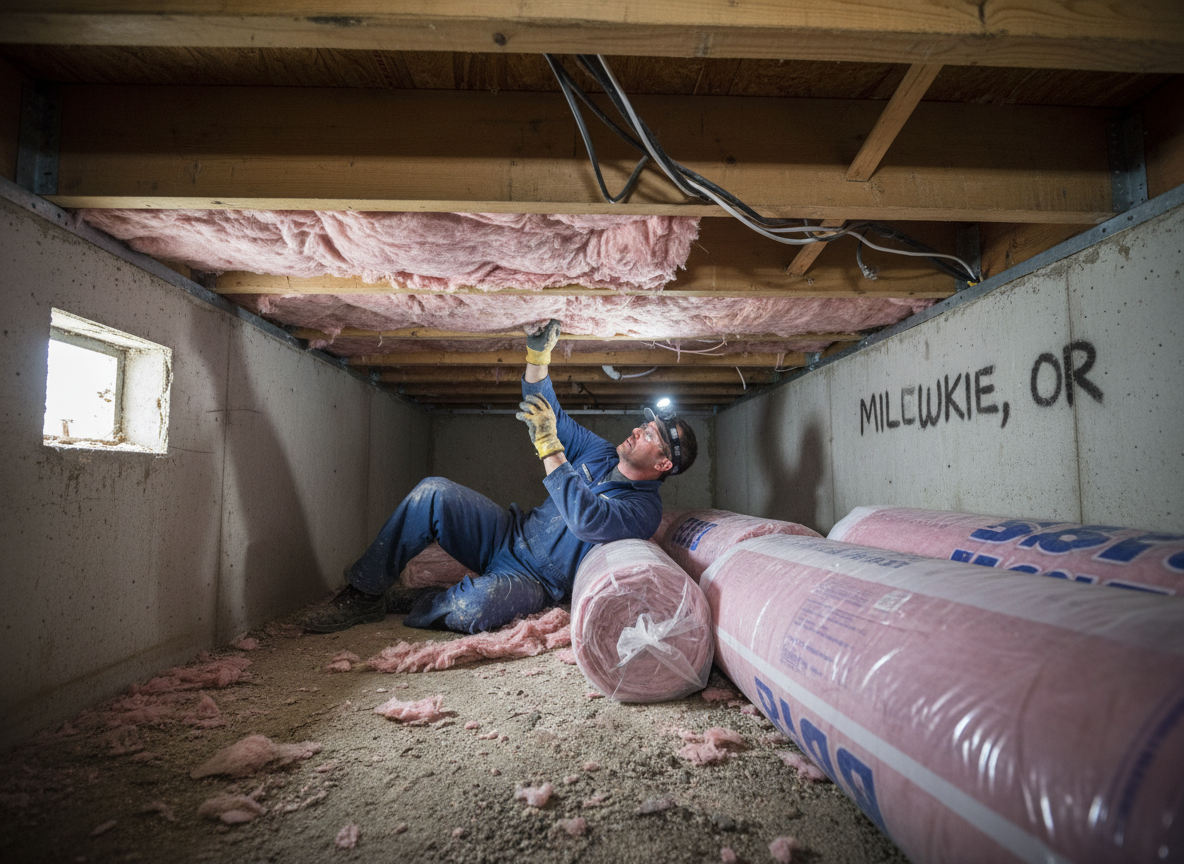
Milwaukie homes built before the 1980s in neighborhoods like Ardenwald and Hector Campbell often sit on pier-and-beam foundations with open crawlspaces. These older structures sit close to the Willamette River, so groundwater and seasonal runoff push humidity levels high under the floor. When winter rains arrive, that moisture condenses on joists and subfloor sheathing, turning fiberglass batts into mold sponges within a single season. Proper floor insulation here requires closed-cell spray foam or rigid mineral wool boards with taped seams, plus a sealed vapor barrier on the soil that runs up the stem walls at least six inches.
In Island Station and Downtown Milwaukie, many homes sit on lots with slight slopes toward the river. This creates cold-air pooling under the floor during the mild wet winters, driving up heating costs even when the rest of the house feels comfortable. We always check for knob-and-tube wiring and old plumbing before any insulation goes in, because both are common in Clackamas County stock from the 1940s through 1960s. Blocking off vents that pull river air into the crawlspace while adding mechanical ventilation prevents the insulation from trapping the very moisture it is meant to manage.
Summer dry spells in the Portland metro area can fool homeowners into thinking crawlspaces stay dry year-round. Once the rains return, any gaps left around plumbing penetrations or at the rim joist let warm, humid air reach the new insulation. We spend extra time sealing these edges with compatible caulk and expanding foam because one missed spot can undo the entire job after the first heavy winter storm.
Edge Cases We See Often
Older Milwaukie homes near Milwaukie Riverfront Park frequently have shallow crawlspaces under 24 inches. This limits access and requires smaller equipment and more time on hands and knees. We also encounter termite damage in joists along the Willamette corridor, which must be addressed before insulation covers the problem.
Technician insight
In Milwaukie, the thing that catches most people out with floor insulation is the shallow crawlspaces and river-driven moisture in Ardenwald and Island Station homes. Homeowners often think adding batts will fix drafts, but without a sealed ground cover the insulation just holds water through our wet winters and fails within two seasons.
Crawlspace Upgrade in Ardenwald
A 1950s home near the Milwaukie Museum had persistent winter floor chill and visible mold on joists. We found an unsealed dirt floor and open vents pulling air from the Willamette River. We installed a sealed vapor barrier, closed the vents, and fitted closed-cell foam between the joists. The homeowner reported warmer floors and no new moisture after the next rainy season.
How it works
- 1
Site Inspection
We enter the crawlspace from Milwaukie homes, check for standing water, wiring, and rot, then measure joist spacing and access points.
- 2
Moisture Control
A 6-mil or thicker vapor barrier is laid on the soil and sealed to the foundation walls, with any existing vents evaluated for closure.
- 3
Insulation Installation
Closed-cell foam or mineral wool is applied between joists with full contact at the subfloor, paying special attention to rim joists facing the river.
- 4
Final Sealing and Ventilation
All penetrations are sealed, mechanical ventilation is added if needed, and the homeowner receives a walkthrough of the finished work.
Pricing
Upfront quotes after crawlspace inspection; cost depends on access difficulty, existing moisture levels, and square footage in Clackamas County homes.