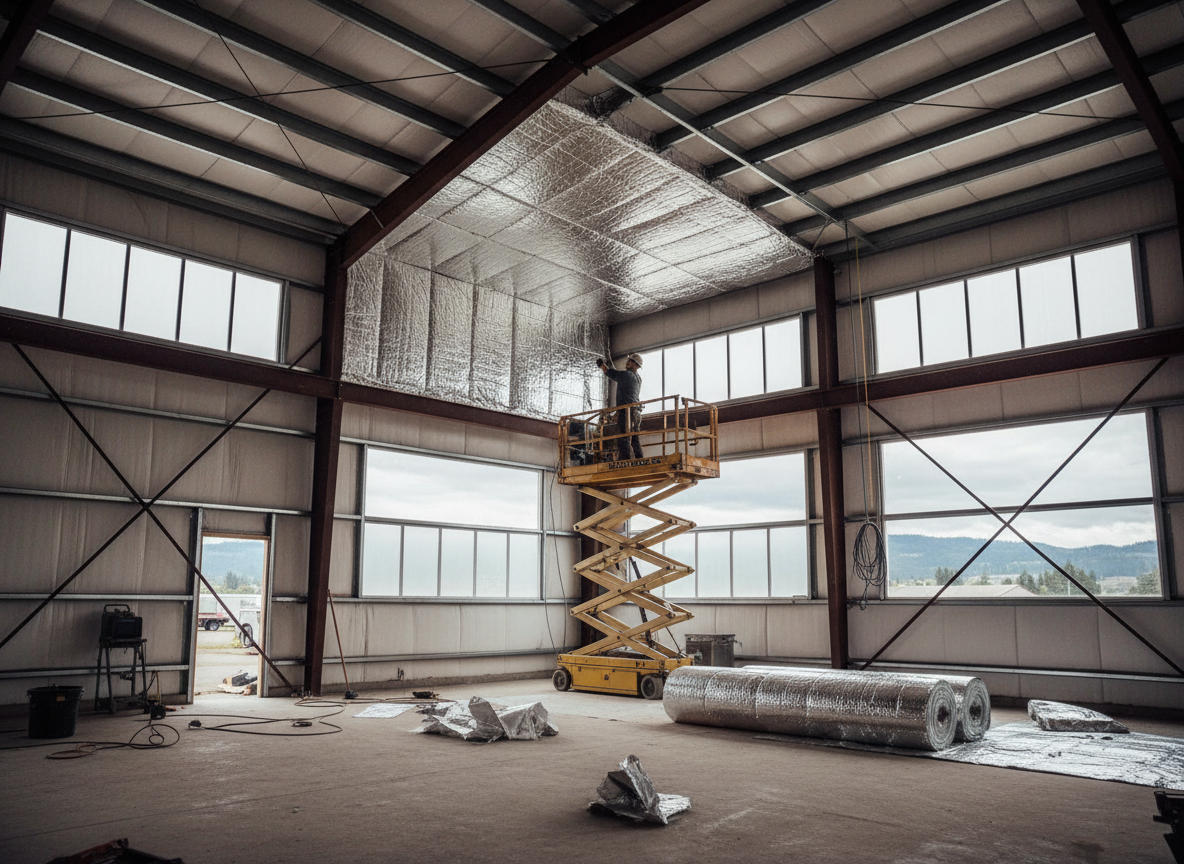
Metal buildings in Milwaukie face persistent condensation risks because mild wet winters keep outdoor humidity high while warm dry summers create large daily temperature swings. Structures near the Willamette River or in Island Station often sit on older concrete slabs that wick moisture upward, so proper vapor retarders and sealed seams become critical to prevent rust on purlins and girts. Spray polyurethane foam or faced fiberglass batts with taped joints are common choices depending on whether the building is used for storage or light manufacturing.
In neighborhoods like Ardenwald and Hector Campbell, many metal shops and warehouses date to the 1960s through 1980s and lack any original insulation. Adding material here requires checking existing roof and wall fasteners for corrosion and confirming that new insulation will not trap water against the metal skin. Clackamas County energy code updates now emphasize continuous insulation layers on metal assemblies, so installers must detail around doors, windows, and penetrations to avoid thermal bridging that defeats the purpose of the upgrade.
Access is another local reality. Buildings along SE International Way or near Milwaukie Riverfront Park frequently have limited overhead clearance or are hemmed in by neighboring structures, forcing crews to work from lifts or remove panels in sections. Portland-area material suppliers stock rigid board and closed-cell foam in quantities that allow same-week delivery, but crews still schedule around the frequent light rain that can halt exterior work for a day or more during winter months.
Technician insight
In Milwaukie, the thing that catches most people out with metal building insulation is the steady river humidity that sits in low spots like Island Station during wet winters. If you skip a continuous vapor barrier on the warm side, moisture condenses on the purlins every night and you are back inside six months later replacing rusted sections.
Workshop Near Milwaukie Museum
A metal shop building showed heavy morning condensation on the ceiling and walls. We found missing insulation at the eave line and unsealed panel laps allowing river moisture inside. We added closed-cell foam on the walls and roof deck, taped every seam, and installed a sealed vapor barrier at the slab edge. Condensation stopped and the owner reported stable interior temperatures through the following winter.
How it works
- 1
Initial Site Walk
Measure the metal structure, note existing corrosion, and identify moisture entry points from roof leaks or ground contact common in river-adjacent Milwaukie lots.
- 2
Material Selection
Choose closed-cell spray foam, rigid boards, or fiberglass with integral vapor barrier based on building use, access, and Clackamas County code requirements.
- 3
Surface Preparation
Clean metal surfaces, seal gaps at seams and fasteners, and install furring or strapping where needed to create a ventilation or drainage plane.
- 4
Installation and Sealing
Apply insulation continuously, tape all joints, and detail around doors, vents, and penetrations to stop air and moisture movement.
- 5
Final Verification
Check for complete coverage, confirm no compression or gaps, and test for remaining condensation risk before leaving the site.
Pricing
Pricing varies with building size, access difficulty, and material choice such as spray foam versus board stock.