2026-10-24 ·
Step-By-Step Guide to Checking Insulation Levels in Milwaukie Crawl Spaces
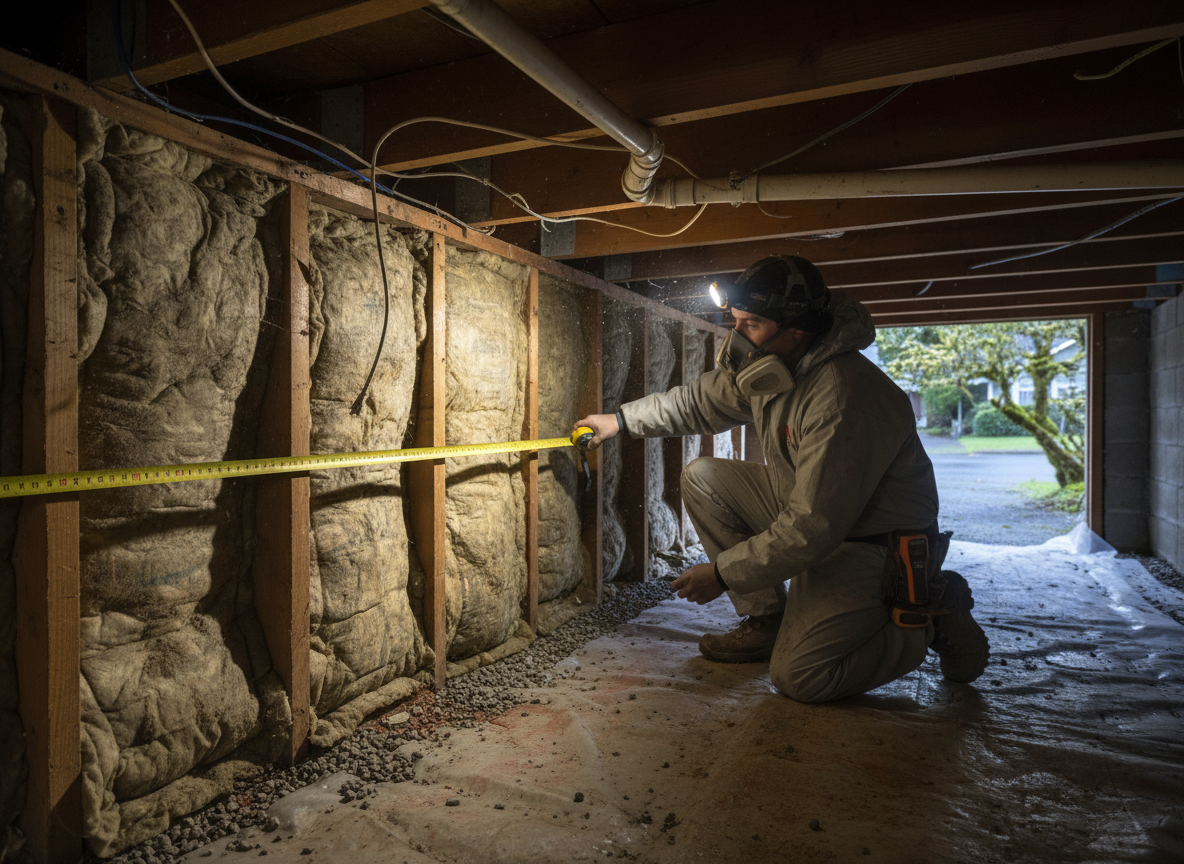
Checking insulation levels in Milwaukie crawl spaces starts with a visual inspection for gaps, compression, and moisture stains followed by depth measurements against recommended R-values for Clackamas County. Homes in neighborhoods such as Ardenwald and Island Station often feature older pier-and-beam construction that leaves crawl spaces exposed to ground moisture during the region's mild wet winters. These conditions accelerate insulation settling and mold growth compared to drier inland areas near Portland.
Preparing for the Inspection
Gather a flashlight, tape measure, moisture meter, and respirator before entering any crawl space in Milwaukie. Wet winters typical of the area raise humidity levels that can reach saturation under floor joists, especially in properties close to the Willamette River or Milwaukie Riverfront Park. Wear knee pads and gloves because gravel or dirt floors in Hector Campbell homes frequently contain sharp debris left from original construction. Check for standing water first—if present, exit and address drainage before proceeding with insulation assessment.
Accessing the Crawl Space Safely
Locate the access door, often found in a closet or exterior hatch in Downtown Milwaukie homes, and ensure adequate ventilation before entry. Many older structures in Historic Milwaukie have low clearances under 24 inches that require crawling on elbows and knees. Note any signs of pest activity or sagging insulation visible from the opening, as these indicate areas needing closer measurement later. Never enter without confirming the space has been ventilated for at least 15 minutes during warm dry summers when temperatures can spike quickly.
Measuring Insulation Depth and Condition
Use the tape measure to record insulation thickness between joists at multiple points, targeting at least 6–8 inches of material for adequate performance in Clackamas County winters. Fiberglass batts commonly found in Ardenwald crawl spaces lose R-value when compressed or wet, so pull back edges gently to check for hidden dampness. Cellulose or rockwool may appear intact on top yet harbor moisture underneath due to condensation from the ground during prolonged rainy periods. Record findings on a simple diagram noting distance from the access point for future reference.
Evaluating Moisture and Airflow Issues
Press a moisture meter against floor joists and subflooring; readings above 15 percent warrant further investigation in Milwaukie’s damp climate. Look for efflorescence on concrete piers or mold on vapor barriers, both common near Johnson Creek where seasonal water tables rise. Poor airflow around the perimeter often leaves insulation saturated even when the center appears dry, reducing effectiveness faster than in homes farther from the river. These checks help determine whether existing material needs removal before any new installation.
Deciding Next Steps Based on Findings
Compare measured depths and moisture levels against local performance expectations for the home’s age and location in Clackamas County. If insulation shows widespread compression or water damage, homeowners typically schedule professional evaluation rather than attempting full replacement themselves. Crawl space insulation services address these exact conditions with materials suited to wet winters. For cost context on related upgrades, review What Milwaukie Homeowners Should Know About Blown-In Insulation Costs. Properties near Johnson Creek benefit from additional reading in Local Considerations for Insulating Milwaukie Homes Near Johnson Creek.