2026-10-24 ·
What Milwaukie Homeowners Should Know About Blown-In Insulation Costs
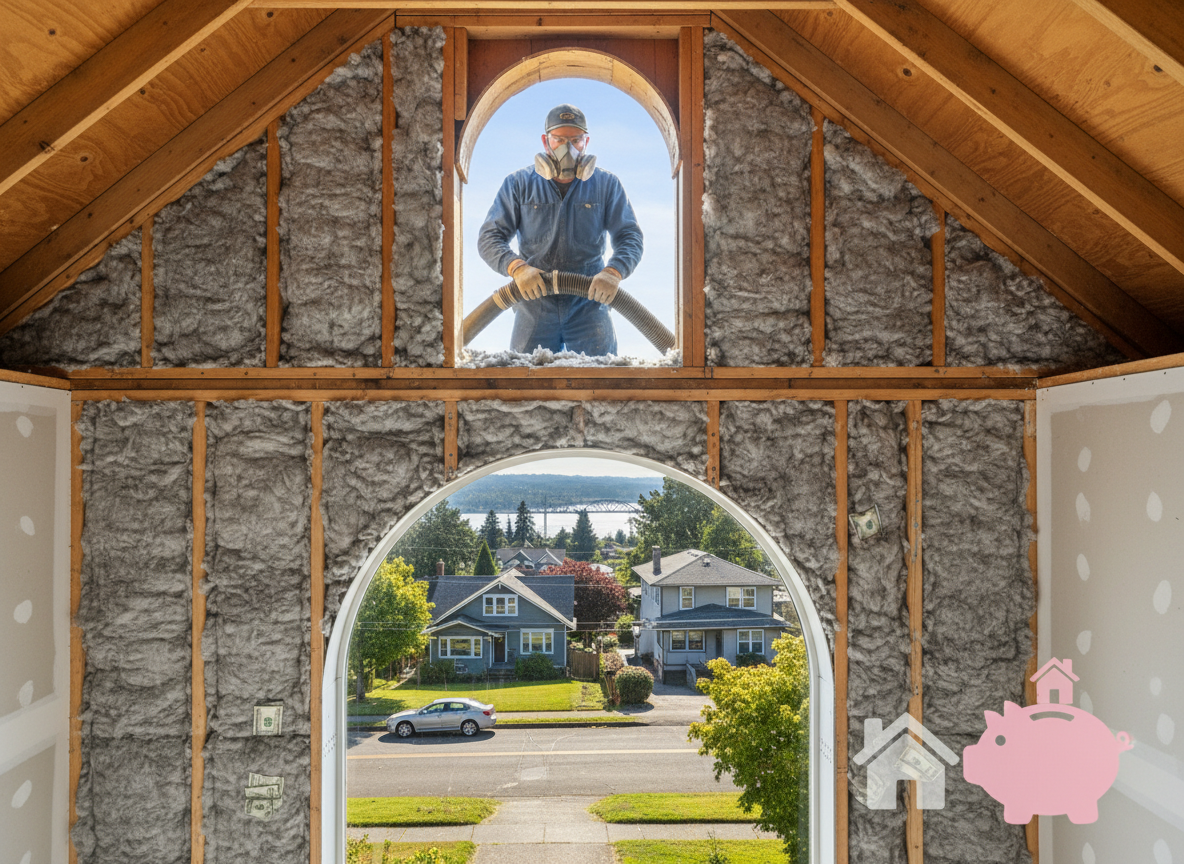
Blown-in insulation costs for Milwaukie homes typically range from $1,200 to $3,800 for an average 1,200-square-foot attic, with per-square-foot installed prices landing between $1.00 and $3.20 depending on material depth and access points.
Typical Cost Ranges for Blown-In Insulation Projects
Homeowners in Downtown Milwaukie and Island Station often face similar project sizes because many homes built before 1970 have open attic cavities that accept cellulose or fiberglass quickly. A 1,000-square-foot attic usually requires 12–16 inches of material to reach R-38, pushing totals to $1,400–$2,900. Larger Hector Campbell properties with finished bonus rooms above garages add labor time for hose routing, increasing costs by $400–$700. These figures cover material, blowing equipment, and basic cleanup but exclude electrical upgrades or mold remediation that occasionally surface during inspection.
Key Factors Affecting Costs in Neighborhoods Like Ardenwald and Downtown Milwaukie
Older homes in Ardenwald frequently contain knob-and-tube wiring or narrow access hatches that slow installation crews and raise labor hours by two to four. In contrast, post-1990 builds near the Milwaukie Museum often have deeper joist bays that hold more material per square foot, lowering overall price per R-value. Proximity to the Willamette River increases humidity loads, so crews sometimes add extra vapor retarders that add $0.30–$0.60 per square foot. Clackamas County permitting for insulation work remains straightforward, yet properties within flood zones may require additional documentation that extends project timelines by one to two days.
Impact of Milwaukie's Wet Winters and Dry Summers on Insulation Expenses
Mild wet winters drive demand for consistent attic sealing because moisture can settle into existing fiberglass and reduce performance within five to eight years. Blown-in cellulose handles this better because it absorbs and releases moisture without losing R-value, though it costs $0.40 more per square foot than fiberglass. Warm dry summers make attic work comfortable from June through September, allowing crews to complete jobs in a single day for most single-story homes. Homeowners who wait until November often pay a 10–15 percent premium because crews schedule around frequent rain and shorter daylight.
Material Choices and Their Price Differences for Local Homes
Cellulose blown-in runs $1.40–$2.10 per square foot and performs well in the region's temperature swings. Fiberglass options sit lower at $1.00–$1.60 per square foot but settle more over time in homes near Johnson Creek. Homeowners comparing options can review the blown-in insulation page for current material specifications. For attics already partially filled, adding attic insulation on top of existing layers often proves cheaper than full removal.
Practical Steps for Homeowners in Clackamas County
Start by measuring current insulation depth in multiple attic locations, then compare against the R-values recommended for Portland metro winters. A Step-By-Step Guide to Checking Insulation Levels in Milwaukie Crawl Spaces walks through the same process for underfloor areas. Next, request itemized quotes that list material type, depth, and square footage covered. HeatShell Dynamics operates 24/7 from 4560 SE International Way, Suite 100, Milwaukie, OR 97222, USA, so scheduling around work hours stays flexible. Finally, verify that new insulation will not block soffit vents, a common issue in Clackamas County homes with shallow eaves.
When Upgrades Make Sense for Milwaukie Properties
Homes in Historic Milwaukie that still rely on original insulation from the 1950s often see energy bill reductions of 15–25 percent after adding blown-in material to R-49. Properties near the Willamette River benefit from the added sound dampening that dense cellulose provides against boat and train noise. Readers exploring service areas can check details for Clackamas to compare pricing across nearby cities. These targeted upgrades pay for themselves fastest in homes heated with electric baseboards, where every degree of retained heat lowers monthly costs measurably.